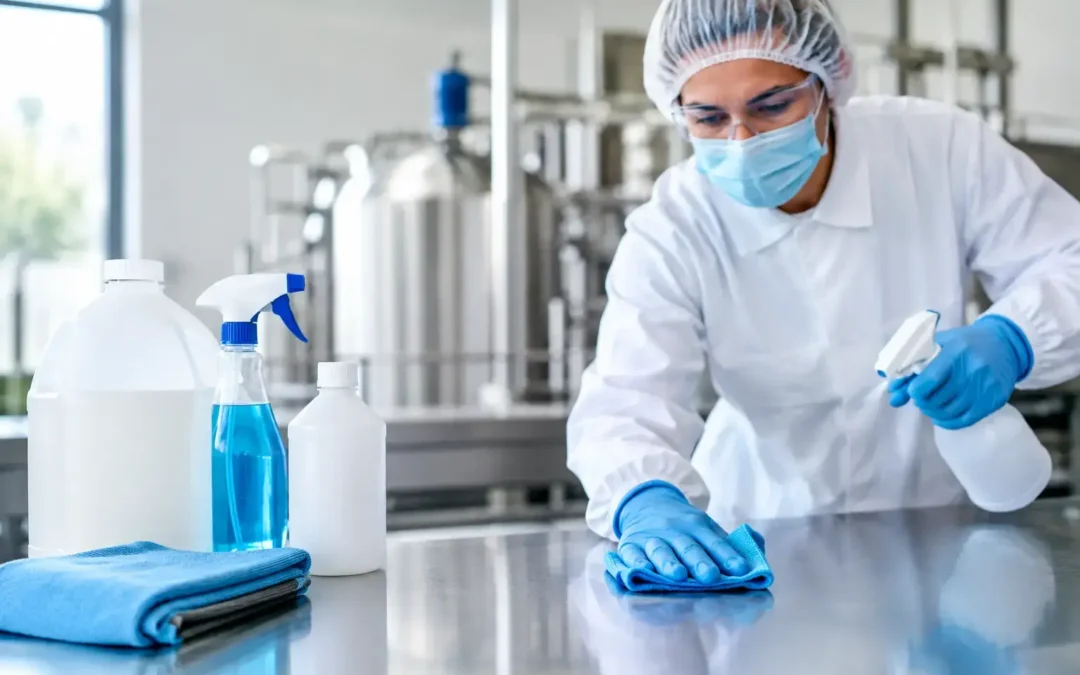
A disinfectant that performs well in a clean office can fail in a production area with oils, dust, food residue, standing water, or constant traffic. Industrial disinfectants must work within the actual conditions of a facility, not just look effective on a product label. For operations teams, the goal is to reduce microbial risk without creating unnecessary downtime, surface damage, odor issues, or complicated cleaning routines.
The right program starts with a practical question: what must be disinfected, what contaminants are present, and how much time does the team truly have to complete the task correctly? The answer differs between a warehouse restroom, a food-service prep area, a hotel laundry room, a pet-care facility, and a manufacturing plant.
What Industrial Disinfectants Are Designed to Do
Industrial disinfectants are formulated for commercial and operational environments where hygiene must be consistent across large areas, high-touch points, equipment exteriors, restrooms, floors, and shared workspaces. Their purpose is to inactivate specified microorganisms on hard, nonporous surfaces when they are used according to the product directions.
That wording matters. Disinfection is not the same as cleaning, deodorizing, sanitizing, or sterilizing. Cleaning removes visible soil and organic matter. Sanitizing reduces certain microorganisms to a level considered acceptable for a stated use. Disinfection targets a broader set of pathogens identified on the product label. Sterilization is a specialized process intended to eliminate all microbial life and is not the normal requirement for most facilities.
A reliable hygiene program may need all of these functions, but they should not be treated as interchangeable. A pleasant fragrance does not confirm disinfection. Nor does a biodegradable formula automatically make a product suitable for every pathogen claim, surface, or process. Sustainability and performance can work together, but selection must be based on verified use directions and operational requirements.
Start With the Conditions on Site
The most effective disinfectant is one employees can apply correctly every shift. Before choosing a chemistry or format, assess the site conditions that affect performance.
First, identify the surfaces. Stainless steel, sealed concrete, ceramic tile, plastics, painted metal, glass, and rubber components may respond differently to repeated chemical exposure. A product that is suitable for restroom fixtures may not be appropriate for sensitive equipment, acrylic surfaces, or food-contact areas without a required rinse step.
Next, consider the soil load. Grease, mineral deposits, protein residue, mud, and biofilm can prevent the active ingredient from reaching the surface. In these situations, a two-step process is often necessary: clean first, then apply the disinfectant. Skipping the cleaning step can produce a surface that looks better while leaving the disinfection result uncertain.
Contact time is equally critical. The surface must remain visibly wet for the full time stated on the label. If a solution dries too quickly, is wiped off immediately, or is diluted incorrectly, the team may not achieve the intended result. This is one reason ready-to-use products, wipes, foaming formats, and properly controlled dilution systems can be valuable in different areas of a facility.
Finally, assess workflow. A product requiring a long contact time may be appropriate for overnight cleaning but impractical for a frequently used lobby restroom. A fast, clearly defined process can improve consistency when teams work across multiple shifts.
Match the Chemistry to the Application
There is no universal disinfectant for every facility. The active chemistry should be selected according to the organism claims needed, surface compatibility, odor tolerance, worker safety procedures, water conditions, and the cleaning process already in place.
Quaternary ammonium compounds are commonly used in commercial facilities because they can be effective on many hard surfaces and are often compatible with routine cleaning programs. However, performance depends on the specific formulation, dilution, contact time, and label claims. They are not the right answer for every pathogen or every high-soil application.
Hydrogen peroxide-based disinfectants can be a practical option where lower residue, broad application versatility, or odor control are priorities. Their compatibility still needs to be reviewed, particularly on sensitive materials or surfaces exposed repeatedly over time.
Chlorine-based products can provide strong disinfecting performance for specific applications, including certain high-risk contamination events. The trade-off is that they may have a stronger odor, can affect some metals and finishes, and require disciplined dilution and handling. They are often best reserved for defined procedures rather than used as a default across an entire building.
Alcohol-based products are useful for small, clean hard surfaces and rapid point-of-use applications. They are generally not the most efficient choice for large floor areas or heavily soiled environments, and rapid evaporation can complicate contact-time compliance.
The correct choice depends on the facility. A pet boarding operation may need a program that addresses organic soils and persistent odors without creating an unpleasant environment for animals. A commercial property may prioritize efficient restroom disinfection and low disruption to occupants. A plant may need compatible solutions for common touchpoints, locker rooms, and nonproduction surfaces while protecting equipment finishes.
Build an Industrial Disinfection Process People Can Follow
A product alone does not create control. The process must be simple enough to execute consistently and specific enough to verify. Start by dividing the facility into zones based on risk and use: restrooms, break rooms, receiving areas, production-adjacent spaces, offices, entrances, and high-touch shared equipment.
For each zone, define which surfaces require routine cleaning, which require disinfection, the frequency, the approved product, the dilution or ready-to-use format, and the contact time. Keep instructions where the work happens. If an employee needs to search for technical information during a busy shift, the process is too difficult.
High-touch surfaces deserve special attention because they are handled repeatedly by multiple people. Door handles, time clocks, switches, handrails, faucet controls, shared keyboards, control panels, and break-room appliances can require more frequent attention than low-touch surfaces. Frequency should reflect traffic, shift changes, contamination risk, and internal standards, not a generic calendar.
Training should cover more than spraying and wiping. Teams need to understand why pre-cleaning matters, how to prepare solutions correctly, how long surfaces must remain wet, when gloves or other protective equipment are required, and how to prevent cross-contamination between areas. Color-coded cloths, labeled bottles, and dedicated tools can reduce mistakes in facilities with varied tasks.
Documentation also has operational value. Cleaning logs, product usage records, dilution checks, and corrective actions can help supervisors identify gaps before they become complaints, failed inspections, or avoidable absences. The objective is not paperwork for its own sake. It is a repeatable process that holds up during staff turnover and peak operating periods.
Environmental Claims Need Practical Review
Many organizations want products that support environmental goals while meeting hygiene expectations. This is a reasonable requirement, especially where products are used frequently and where wastewater, employee exposure, and customer perception matter.
Still, biodegradable should be evaluated as one product attribute, not as a replacement for technical review. Ask what parts of the formulation are biodegradable, whether the product meets the required disinfection claims, what dilution is specified, whether it leaves residue, and how it performs on the surfaces in your facility. Also consider packaging volume, concentrated formats, and dispensing controls, which can reduce product waste and transportation needs.
The most responsible selection is one that delivers the needed result with correct use, avoids premature damage to surfaces, and fits the facility’s waste-handling and safety practices. A poorly matched “green” product that must be reapplied excessively is not an efficient solution. Neither is a highly aggressive chemistry used where a milder, effective option would meet the requirement.
Common Gaps That Reduce Disinfection Results
Many failures are procedural rather than chemical. Using a disinfectant on a dirty surface, mixing chemicals, guessing at dilution ratios, and wiping before contact time are common examples. Another frequent issue is using one product across every department without checking whether the organism claims and material compatibility match each task.
Mixing products is especially risky. Combining chemicals can reduce effectiveness, create irritating vapors, or damage surfaces. Each product should be used only as directed, in clearly labeled containers, with its safety information available to the team.
Facilities should also avoid treating odor as proof of cleanliness. Odors often point to a source issue: trapped moisture, organic residue, drain conditions, waste handling, or inadequate cleaning frequency. Disinfection may be part of the response, but odor control often requires a separate, source-focused solution.
A site review can turn these variables into a workable program. Avante Technologies helps organizations align biodegradable cleaning and hygiene solutions with concrete operational needs, from product selection to process guidance. The right industrial disinfection plan is the one your team can repeat correctly, verify confidently, and adapt as your facility changes.